LASIK

LASIK (Laser In Situ Keratomileusis) – the most commonly performed laser eye surgery procedure throughout the world.

The purpose of the LASIK procedure is to correct common vision problems—specifically nearsightedness (myopia), farsightedness (hyperopia), and astigmatism. By precisely reshaping the cornea, the surgery allows light to focus correctly onto the retina, providing clear vision.

At Fendalton Eye Clinic, Dr Kent uses the combined technology of a Zeiss VisuMax 800 femtosecond laser to create a micro thin flap on the front surface (cornea) of the eye followed by the precision of the Schwind Amaris 1050RS excimer laser to sculpt the inner layers of the cornea to achieve the desired refocusing.

We are committed to the safety and precision of your laser eye surgery treatment. NASA will only allow their fighter pilots and astronauts to have a LASIK procedure that is carried out with a femtosecond laser creating the corneal flap. You deserve this level of accuracy too.


There are two steps to the LASIK procedure.


LASIK – Step 1

First a micro thin flap is created in the cornea (front clear window of the eye). At Fendalton Eye Clinic Dr Kent uses the Zeiss VisuMax® (a femtosecond laser) to create a precision LASIK flap.

Dr Kent, uses the precision of a laser to “create” rather than “cut” the corneal flap, as a result provides added safety for patients with a more predictable outcome.

With a femtosecond laser we can create the corneal flap using the safety and accuracy of a computer guided laser – without a blade ever touching your eye. With a laser creating the LASIK flap, Dr Kent achieves the exact thickness of flap that is required.


LASIK – Step 2

The precision flap is lifted and the second laser, the excimer laser is used to reshape the inner layers of the cornea with your personalised LASIK treatment profile, incorporating eye recognition technology and accuracy of the Schwind Amaris 1050RS seven dimensional eye tracker to achieve precise delivery of treatment.

At the end of the LASIK laser eye procedure, the flap is naturally relocated into position where it adheres without any stitches.


Benefits of LASIK.


The primary benefit of undergoing LASIK is the reduction or complete elimination of the need for glasses or contact lenses. This often results in improved quality of life, greater convenience, and unhindered vision for activities like sports and swimming. Furthermore, the precision of modern laser technology leads to highly predictable visual outcomes.


LASIK - eye cornea
Step 1
LASIK - laser beam
Step 2

What to expect

Treatment options explained
1

Your free assessment

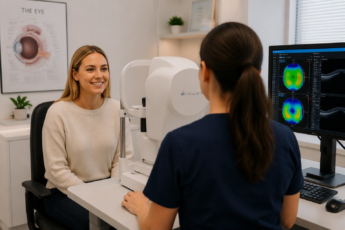
A half-hour consultation with an experienced member of our technical team, free and with no obligation — in Christchurch, or closer to home in Invercargill, Queenstown, Dunedin and Nelson. We image your cornea, the clear window at the front of your eye, to check its shape, record your vision and review your prescription. Then we discuss your eyes, your lifestyle, and which treatment is likely to suit you. Bring your glasses; if you wear contact lenses, you can keep them in.

Meeting your surgeon at Fendalton Eye Clinic
2

Your consultation with the surgeon

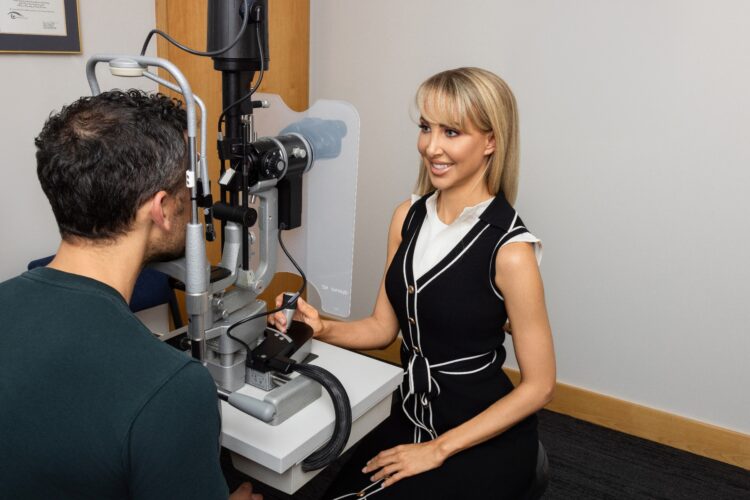
A full appointment — about 90 minutes — with your choice of ophthalmologist (eye surgeon) either Dr Zea Munro or Dr David Kent, who will carry out your treatment. We take more detailed measurements and images, and the surgeon examines the health of your eyes, then they will talk you through exactly what happens during LASIK. There is plenty of time for any questions you have. The consultation is included in your surgical fee. If you choose not to proceed there is a fee for the surgeon’s time and the scans.

The day of your LASIK treatment
3

The day of your treatment

Please do not use any makeup, moisturiser or face cream for 24 hours before your LASIK surgery. Allow 90 minutes at the clinic: paperwork and cross-checks first, then time to relax in a recliner before you go through to the laser suite. You are in the suite around 25 minutes, but the laser takes 10 seconds to create each flap and a minute to reshape each eye. The rest is setup and checking. You will need to arrange for someone to drive you home after your LASIK procedure.

Back to normal life after LASIK
4

The first day or two

Your eyes may feel gritty or sandy for the first 4 hours, while the surface cells heal over the edge of the flap. Blink normally, but don’t squeeze your eyes shut or rub them. You’ll need someone to drive you to your check the next morning — after that, 98% of our patients meet the legal standard for driving. Continue with TobraDex (combination antibiotic and anti-inflammatory) eyedrops one drop four times a day for 7 days.

Routine checks
5

Your follow-up

We see you the morning after your treatment — allow 30 minutes. A technician measures your vision, then your surgeon checks how your eyes are healing and advises when you can resume specific activities. We recommend waiting 6 weeks before resuming contact sport such as rugby. Routine follow up is at 1, 3 and 6 months, either here or with your own optometrist, so you do not need to return to Christchurch.

Not near any of these? Start with a phone call or a Zoom — the scans need you in the room, but the questions don’t. Book a virtual assessment

Common Questions

FAQ about LASIK Surgery

How does the LASIK flap stick down?

The LASIK flap settles back into position without the need for stitches. It is held in place until it heals by the natural stickiness of the inner layers of the cornea in combination with the "suction" effect of the back layer of cells (endothelium) of the cornea. Within four hours the front layer of cells (epithelium) heal over. We can provide optional clear eye shields to wear after your LASIK surgery and overnight so that your eyes are not accidentally rubbed or bumped in the initial healing period.

Have other medical doctors had laser eye surgery at Fendalton Eye Clinic?

More than four hundred medical doctors and optometrists combined have had their corrective laser eye surgery at Fendalton Eye Clinic. Five staff members have had corrective laser eye surgery. A number of national sporting representatives have also chosen to have their surgery at Fendalton Eye Clinic.

How long will my LASIK procedure take on the day of surgery?

Plan to be at the clinic for about 90 minutes. Around 30 minutes of that is in the laser suite. The laser treatment itself takes only about a minute per eye. You'll also come back the next day for a check-up that takes about 30 minutes.

What happens during your visit:

1. Arrival: we go through your paperwork with you.

2. Pre-operative checks: one of our ophthalmic technicians carries out cross-checks. If you've chosen to have a mild sedative, you'll be given it at this time.

3. Relaxing before surgery: you'll have some quiet time in the pre-operative room.

4. Laser suite (about 30 minutes):

  • Creating the flap: the femtosecond laser creates a thin flap in the cornea in about 10 seconds per eye.
  • Reshaping the cornea: the laser bed rotates to the excimer laser. Your surgeon gently lifts the flap, and the excimer laser reshapes the inner layers of the cornea to correct your focusing error. This takes about 1 minute for each eye.
  • Settling the flap: your surgeon places the flap back into position, and we wait about a minute for each flap to settle, without the need for any sutures.

5. Recovery: you'll rest in our post-operative room with a hot drink while we monitor you for 10–15 minutes. We then check your eyes before you go home.

The treatment itself is very quick. Most of your time in the laser suite goes into careful setup and our "time out" cross-checks, which we carry out throughout your procedure.

Day one post-op appointment: we'll see you at the clinic the next day to check your eyes. Allow about 30 minutes.

How should I prepare on the day of my laser eye surgery?

On the day of your surgery:

 Eat and drink as normal.

 Keep taking your usual prescription medications.

 Your eyes may be gritty and stingy after your surgery, we recommend that you take pain relief 30 minutes before your appointment:

Either 2 paracetamol tablets or 2 ibuprofen tablets, whichever medication is well tolerated by you.

 Wear comfortable, low-lint clothing. Trousers are easier than a skirt or dress for lying down in theatre.

 Don't wear makeup, perfume or facial moisturiser.

 Arrange for someone to drive you to where you're staying after your surgery.

What are the complications of LASIK?

Every procedure has the possibility of complications, with the majority of these resolving over time or being able to be managed with further treatment by Dr Kent:
  • Mild dry eye - Some people experience mild to moderate dry eye symptoms after laser eye treatment. Use of lubricating eyedrops may be required. By 3-6 months the eyes are usually back to normal.
  • Undercorrection - If the refraction is not fully corrected and it causes a problem then an enhancement procedure can usually correct it.
  • Overcorrection - An initial overcorrection is expected for high corrections and in hyperopia.
  • Induced astigmatism - Can usually be corrected with enhancement procedure.
  • Regression – This is the normal healing of the eye and results in undercorrection. It is corrected with enhancement procedure.
  • Infection -We have had only one case in over 30,000 LASIK procedures which quickly responded to antibiotic eyedrops and resolved without complication.
 

What type of anaesthetic is used for laser eye surgery?

All laser eye surgery vision correction procedures are performed with anaesthetic drops placed in the eye which are extremely effective at completely numbing your eyes.

Can the LASIK flap be dislodged?

During the first few weeks after your LASIK surgery you do need to be careful of your eyes, as a sharp object in your eye could possibly dislodge the flap. If the flap did get dislodged, then it can be repositioned. After six weeks the LASIK flap is well healed. The chance of the LASIK flap being dislodged at this point is remote. It would take an event that would otherwise cause a severe injury to your eye to cause a problem with the flap after six weeks so we do recommend avoiding contact sports for six weeks following LASIK surgery.

How much does laser eye surgery cost?

The current fee is $3,750 per eye — this includes your consultation, surgery (SMILE pro, LASIK or PRK), and six months of follow-up care within New Zealand. Can I get finance? Yes. Finance options are available at Fendalton Eye Clinic — more details are available on our Laser Eye Finance page. How can I pay? We accept EFTPOS, credit card, bank transfer, and finance plans.  
Read More FAQs
Fendalton eye clinic Services

All Treatments

Lasik

Dr David Kent uses the safety, precision & accuracy of a Zeiss VisuMax® femtosecond laser to create a flap in the cornea.

Learn More
SMILE Laser

With the development of SMILE, a minimally invasive and flapless procedure has become available. It has quickly established itself as a gentle treatment option.

Learn More
Advanced Surface Treatment (PRK)

Surface excimer laser treatments make up about 20% of all excimer laser surgery worldwide.

Learn More
Key Differences

Laser Vision Correction has been available for nearly thirty years. There have been many developments and continuous improvements.

We are committed to providing excellence in laser eye surgery through the expertise of Dr David Kent & a dedicated team of caring staff